
Procedure and access
Confirm the intended procedure, open or minimally invasive access, and the required instrument length or geometry.
Application
Energy instruments for minimally invasive veterinary procedures.
At a Glance
Laparoscopic and other minimally invasive techniques are increasingly used in veterinary surgery.
Laparoscopic ultrasonic and vessel sealing instruments are designed to support cutting and sealing through small access ports.
Selection Guidance
Confirm the intended procedure, open or minimally invasive access, and the required instrument length or geometry.
Match the workflow to cutting, coagulation, bipolar energy, vessel sealing or radiofrequency ablation functions.
Confirm compatible instruments, supplied accessories, product documentation and market-specific availability before quotation.
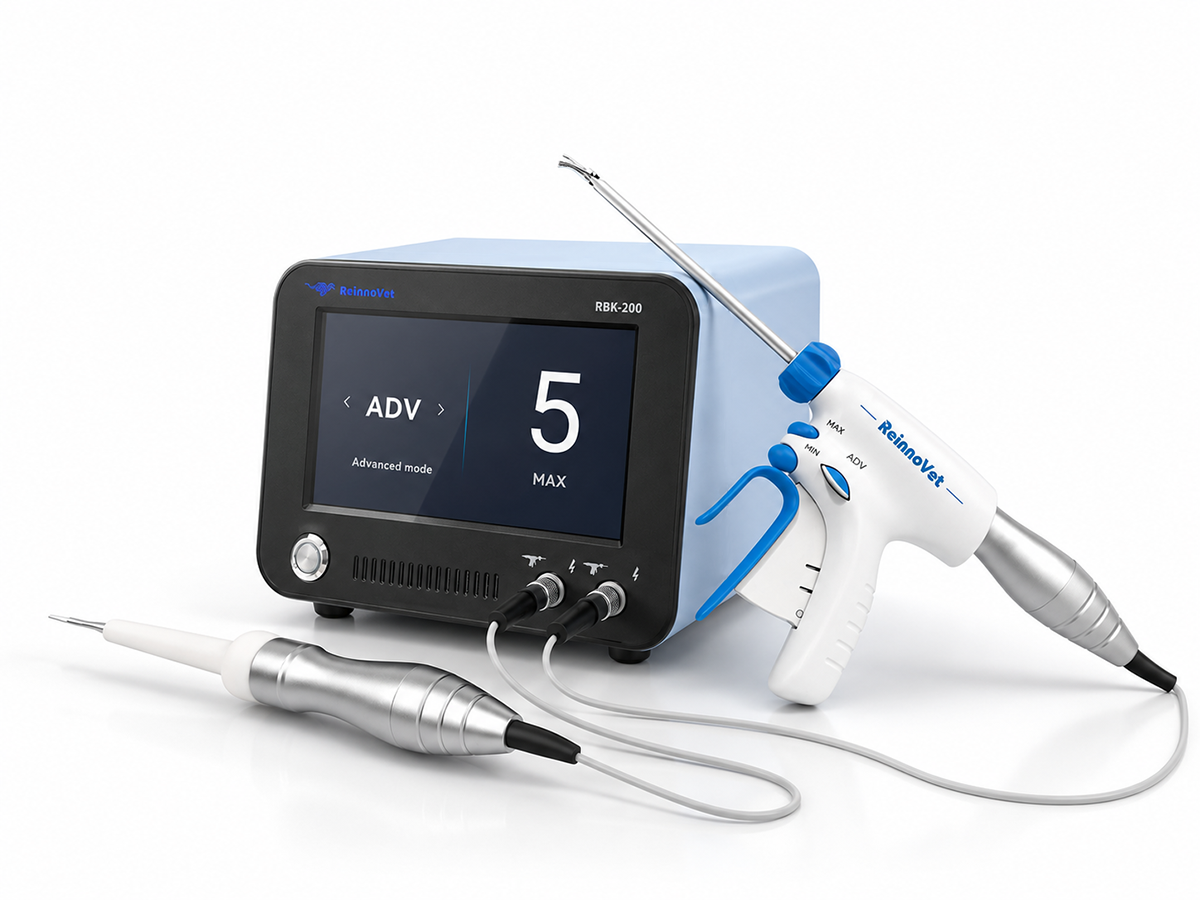
Dual-interface veterinary ultrasonic surgical system combining an ADV forceps instrument with dedicated Knife, Ball and Loop ultrasonic instruments.
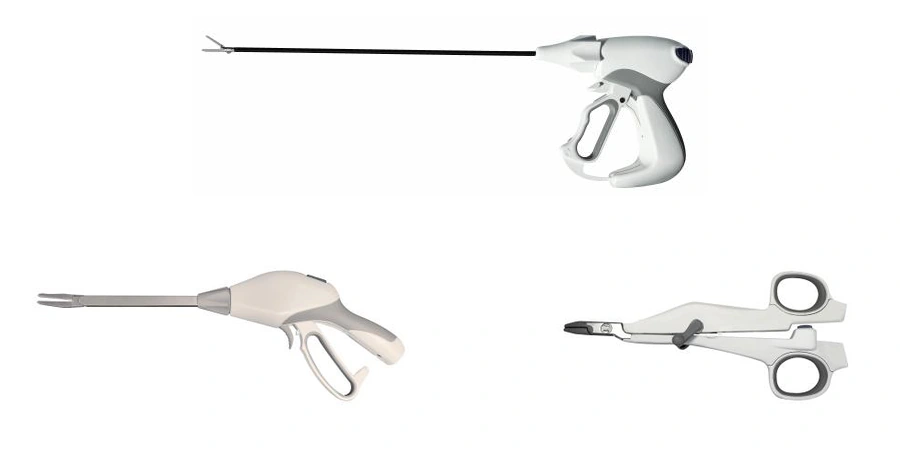
Veterinary vessel sealing instrument for compatible energy-platform workflows.
Questions and Answers
Common requirements include controlled soft-tissue cutting, coagulation and vessel sealing. The selected device and shaft configuration must suit the access approach.
RBK-200 is presented for open and laparoscopic soft-tissue workflows with model-specific ultrasonic instruments and configurations.
Confirm the host system, interface, shaft length, instrument type, supplied accessories and applicable product documentation before quotation or use.
Contact ReinnoVet for product information, documentation and distribution inquiries.